The Sun, The Moon, a frame by frame animation, by Berk Hart Design

Feature Article

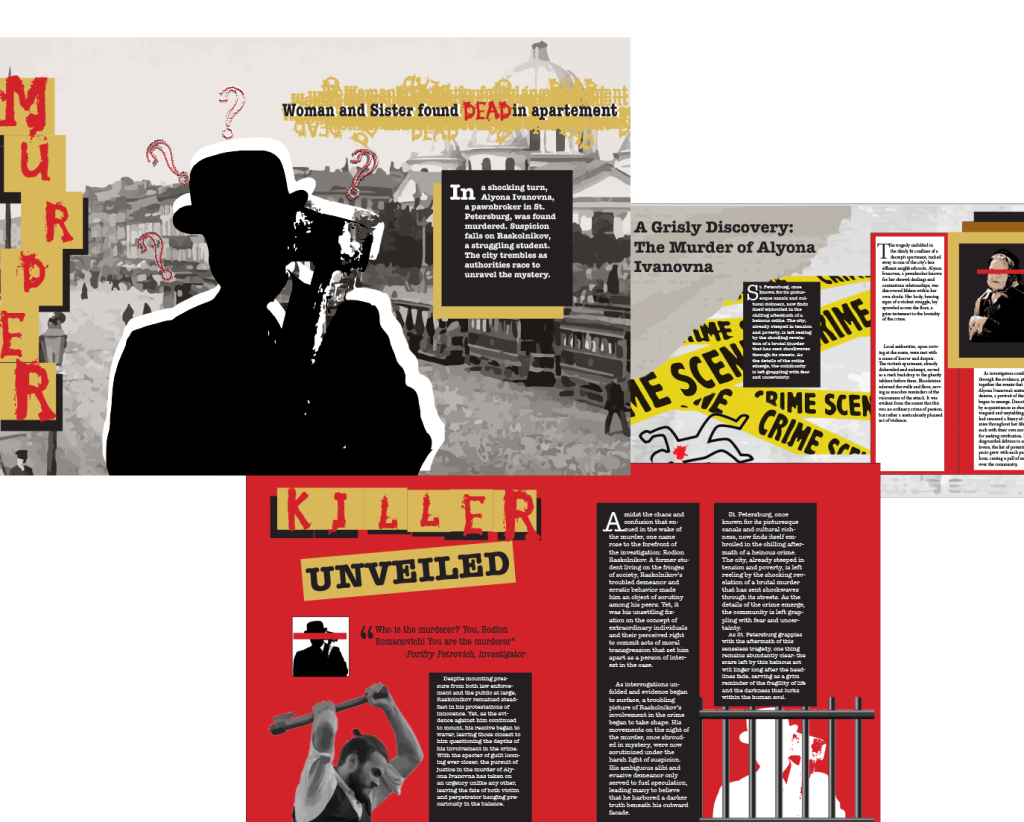
When designing a magazine feature article for Crime and Punishment, I wanted to approach it from a whodunnit angle that would immediately draw readers in with a sense of mystery and suspense. The challenge was to capture the psychological tension of the novel while focusing on the crime at its core. I imagined the ad starting with an abstract representation of the murderer, with a silhouette of a man holding an axe, suggesting something sinister has occurred. For the typography, I chose bold, and bloody fonts to evoke the urgency and tension of a detective story, and paired it with the title of “Murder” to spark curiosity. I kept the color palette dark and moody to reflect the book’s grim tone, using shadows and contrasts to create a sense of unease and uncertainty, much like the inner turmoil of Raskolnikov himself. However, I also included the color yellow because of it’s gratuitous use in the book. The goal was to hint at the psychological unraveling of the protagonist, creating a visual narrative that would draw readers in and make them want to uncover the truth behind the crime, all the while conveying information in a way that was aesthetically pleasing.

Crime and Punishment Article Design
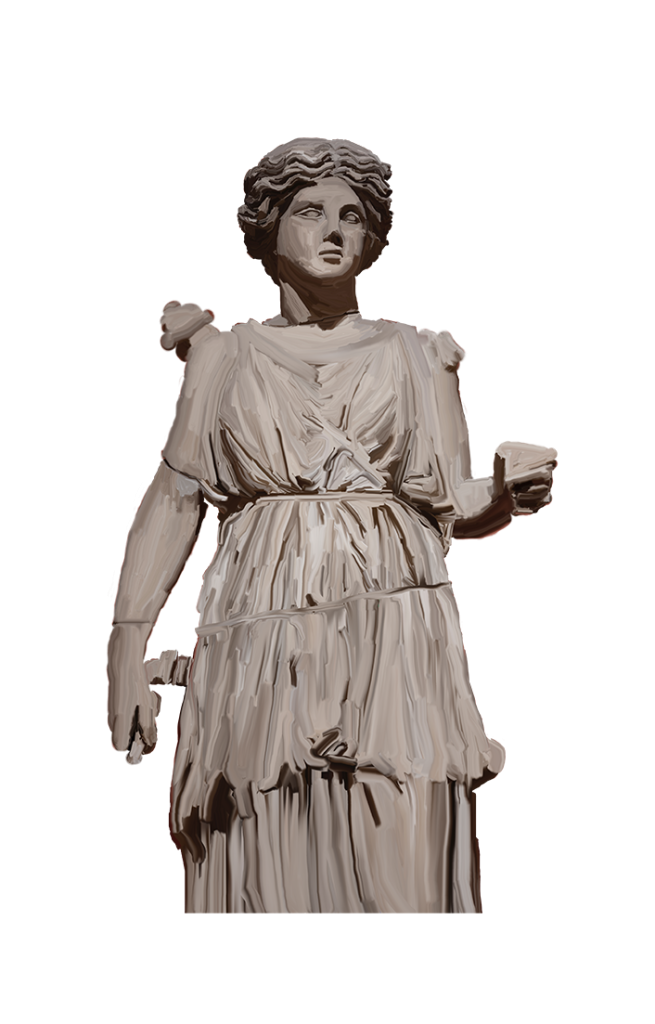
Drawing of an Ancient Statue - Berk Hart

“People ignore design that ignores people.” – Frank Chimero

The quote “People ignore design that ignores people” by Frank Chimero really resonates with how I approach my work as a designer. It’s a reminder that design isn’t just about making things look good; it’s about connecting with the audience on a deeper level. When designing, I always try to keep the user or viewer in mind, considering not only aesthetics but also how the design will be experienced. If a design feels disconnected or doesn’t speak to the needs, interests, or emotions of the audience, it’s easy for it to be overlooked, no matter how visually striking it might be. Whether it’s through intuitive layouts, thoughtful color choices, or a clear visual hierarchy, my goal is always to create designs that resonate with people—making them feel seen, understood, and engaged. In the end, design should be something people notice because it’s relevant and relatable to them, not just because it’s visually appealing.